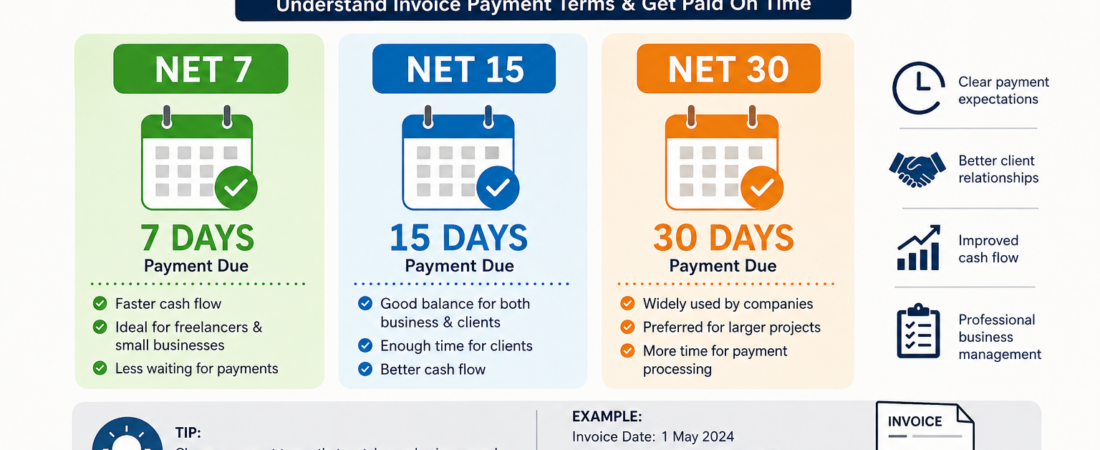
If you create invoices for your clients, you have probably seen terms like Net 7, Net 15, or Net 30. Many new business owners don’t know what these terms mean, but they are actually very simple.
These payment terms tell your customer how many days they have to pay your invoice.
For example, if you send an invoice today and write Net 15, your customer has 15 days to make the payment.
In this article, we’ll explain Net 7, Net 15, and Net 30 in simple words so you can choose the right payment term for your business.
What Are Payment Terms?
Payment terms are the rules written on an invoice that tell the customer when payment is due.
Instead of asking your customer to “pay soon,” you give them a clear deadline.
This helps both you and your customer understand when the payment should be completed.
For example:
- Invoice Date: 5 July
- Payment Terms: Net 15
- Payment Due: 20 July
Simple and clear.
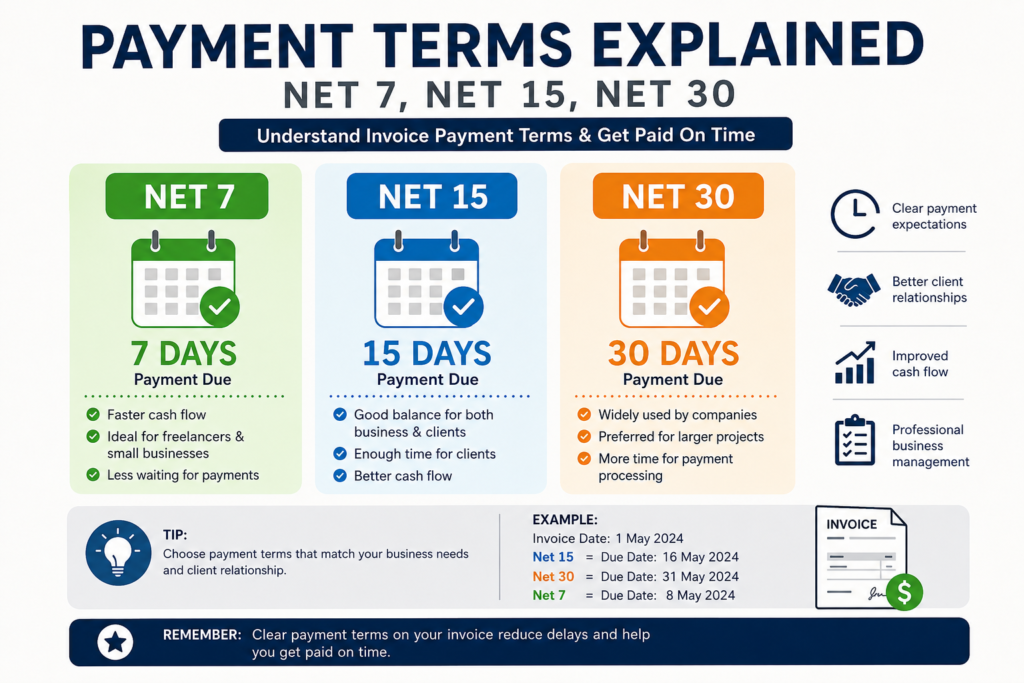
What Does “Net” Mean?
The word Net simply means the customer has a certain number of days to pay the full invoice amount.
Here are the most common payment terms:
- Net 7 = Payment within 7 days
- Net 15 = Payment within 15 days
- Net 30 = Payment within 30 days
Nothing complicated. The number only tells you how many days the customer has to pay.
What Is Net 7?
Net 7 means the customer should pay the invoice within seven days from the invoice date.
Example
Invoice Date: 1 August
Payment Terms: Net 7
Due Date: 8 August
Net 7 is a good choice if you are a freelancer, designer, writer, or small business owner who needs quick payments.
Benefits of Net 7
- Faster payments
- Better cash flow
- Less waiting for money
- Easier to manage business expenses
The only downside is that some large companies may need more time to process payments.
What Is Net 15?
Net 15 gives your customer fifteen days to pay the invoice.
Example
Invoice Date: 10 August
Payment Terms: Net 15
Due Date: 25 August
Many small businesses prefer Net 15 because it gives customers enough time while still helping the business receive payments quickly.
Benefits of Net 15
- Good balance for both businesses and customers
- Faster than Net 30
- Suitable for regular clients
- Helps maintain healthy cash flow
What Is Net 30?
Net 30 means the customer has thirty days to pay after the invoice date.
Example
Invoice Date: 1 September
Payment Terms: Net 30
Due Date: 1 October
Large companies and corporate clients often prefer Net 30 because their payment process usually takes longer.
Benefits of Net 30
- Preferred by many companies
- Builds trust with business clients
- Common in B2B businesses
The disadvantage is that you have to wait longer to receive your money.
Net 7 vs Net 15 vs Net 30
Here’s a simple comparison:
| Payment Term | Due Time | Best For |
|---|---|---|
| Net 7 | 7 Days | Freelancers and small businesses |
| Net 15 | 15 Days | Agencies and service providers |
| Net 30 | 30 Days | Companies and wholesale businesses |
Which Payment Term Should You Use?
The answer depends on your business.
Choose Net 7 if you want faster payments and usually work with individuals or small businesses.
Choose Net 15 if you want to give customers a little more time without waiting for a whole month.
Choose Net 30 if you work with large companies that follow longer payment cycles.
There is no right or wrong choice. Pick the option that works best for your business and your customers.
Tips to Get Paid Faster
No matter which payment term you choose, these simple tips can help you receive payments on time.
- Send invoices as soon as the work is completed.
- Clearly mention the payment due date.
- Accept online payment methods.
- Send a friendly reminder before the due date.
- Keep your invoices simple and professional.
These small habits can make a big difference.
Example Payment Terms
You can use simple payment terms like these on your invoices:
Net 7
Payment is due within 7 days from the invoice date.
Net 15
Please make payment within 15 days of receiving this invoice.
Net 30
Payment is due within 30 days. Thank you for your business.
Frequently Asked Questions
Is Net 30 better than Net 15?
Not always. Net 15 helps you get paid faster, while Net 30 gives customers more time to pay.
Do weekends count?
Yes. In most cases, Net payment terms are based on calendar days unless you mention business days.
Can I use different payment terms for different clients?
Yes. Many businesses offer different payment terms depending on the customer or project.
Final Words
Payment terms are a small part of an invoice, but they are very important. They tell your customer exactly when payment is expected and help avoid confusion.
Whether you choose Net 7, Net 15, or Net 30, make sure the payment terms are clearly written on every invoice. Clear invoices help you get paid on time, build trust with your customers, and keep your business running smoothly.
Disclaimer
The information provided in this article is for general educational and informational purposes only. While we make every effort to keep the content accurate and up to date, it should not be considered legal, financial, tax, or accounting advice.
Payment terms such as Net 7, Net 15, and Net 30 may vary depending on your business agreement, industry practices, and local laws. Before using any payment terms or creating business invoices, you should consult a qualified accountant, tax professional, or legal advisor if you need advice specific to your situation.
InvoiceBanale.com is not responsible for any business decisions, payment disputes, or financial losses resulting from the use of the information provided in this article.